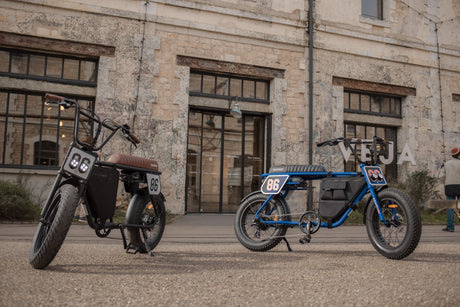
With the increase in car traffic and ecological awareness, many city dwellers are turning to more environmentally friendly and less bulky means of transportation. Among these, the electric bike is particularly appreciated for its undeniable advantages:
-
Facilitated Mobility: With electric assistance, cyclists can cover longer distances and overcome hills without excessive effort, making commuting more accessible.
-
Environmental Sustainability: Electric bikes help reduce levels of air pollution, thereby preserving the air quality in urban areas.
-
Health and Well-Being: Encouraging a more active life, electric bikes offer versatility that suits all fitness levels.
-
Financial Savings: Despite the initial investment, electric bikes are less expensive to maintain and use compared to cars or scooters, offering significant long-term savings.
-
Adaptability and Versatility: Whether for daily commutes, city errands, outdoor getaways, or even cycle touring, electric bikes offer a reliable and adaptable transportation solution.
 Urban policies: essential support for the rise of the electric bike
To encourage the use of electric two-wheelers, several metropolitan areas are implementing suitable infrastructure and financial incentives. On the agenda are notably secure bike lanes, dedicated parking zones, and subsidies for the purchase of electric bikes. Additionally, some cities have established electric bike-sharing services, thus facilitating access to this mode of transport for residents and visitors.
Amsterdam: the benchmark in soft mobilityCapital of the bicycle, Amsterdam stands out as an example to follow. The city has nearly 500 km of bike lanes and prides itself on being one of the world's cycling capitals. It is also here that Libby, an electric bike-sharing service, was launched in 2017.
Paris: an ambitious strategy to promote cycling
The City of Light is not left behind and is multiplying initiatives to encourage cycling, such as increasing the number of bike lanes and providing electric bikes for self-service (Vélib). Subsidies for the purchase of an electric bike have also been implemented to support users in their eco-friendly approach.
Competitors of the electric bike: scooters and other PMDs
The rapid development of new modes of transport and the alarming increase in accidents related to motorized personal mobility devices (EDPM) have forced certain cities, including Paris, to reconsider their regulatory policies. However, despite the danger of electric scooters and their disappearance in Paris, the electric bike continues to establish itself as a sustainable and practical solution for urban travel. In conclusion, electric bikes have profoundly transformed urban mobility by offering an ecological and fast alternative to the all-car approach. Thanks to proactive policies led by certain metropolitan areas, city dwellers are gradually adopting this mode of transport that meets their needs for flexibility, speed, and environmental respect. It is therefore likely that the rise of electric bikes is only just beginning and that these motorized two-wheelers will become an essential element of tomorrow's urban mobility.