


Choosing the right bodyboard
Your board is at the heart of every session. Whether you're new to the sport or looking for more performance, choosing a bodyboard suited to your level is essential for progressing and enjoying the waves.
See more
Bodyboards for every rider
Our selection of Bodyboards includes models suited to beginners and the most demanding riders alike. Each shape is designed to offer the best balance of buoyancy, control, and speed for your level.
To complete your setup, check out our Bodyboarding Fins, essential for boosting propulsion and getting into waves more easily.
Complete your setup
You'll also find our selection of Bodyboard Leashes, Bodyboard Bags, and Bodyboard Repair products to protect and maintain your gear for the long haul.
-
-
-
-
-
-
-
-
-
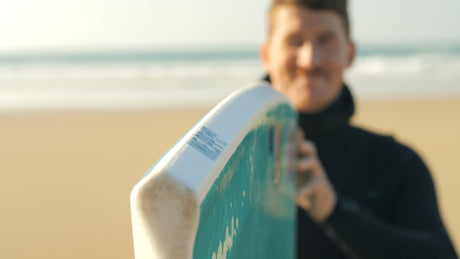 Discover
Check out our buying guide to find your ideal bodyboard!
-
-
-
-
-
-
-
-
-
-
-
-
-
-
-
-
-
-
-
- Up to 30% off
Sniper
Shenron PE Flex - Improve Series Bodyboard
Sale priceFrom €97,99 Regular price €139,99Unit price -
- Up to 30% off
Sniper
Prayer PP Drop Knee Stiff - Elite Series Bodyboard
Sale priceFrom €223,99 Regular price €319,99Unit price -


FAQ — Choosing the right bodyboard
How to choose your bodyboard?
How to choose your bodyboard?
Choose your bodyboard based on your weight, height, skill level and riding style. Then compare the construction and flex, taking water temperature and the waves you ride into account. A board for discovering the sport, a model for progressing in prone position and a bodyboard designed for drop-knee riding each meet different needs.
What size bodyboard should you choose for your build?
What size bodyboard should you choose for your build?
Bodyboard length is usually expressed in inches: a 42-inch board is about 106.7 cm long. Use the recommended weight and the manufacturer’s size guide as a starting point, then factor in your height and riding style. Width and thickness also affect buoyancy, so two boards of the same length won’t necessarily suit the same build.
Which bodyboard should you choose as a beginner?
Which bodyboard should you choose as a beginner?
Choose a board suited to your build, easy to handle and designed for learning. In the Sniper range, the Shenron PE Flex and Cortex PE Flex are great options for getting into the sport and progressing. The right choice depends on the available sizes, your budget and the conditions you ride in. The most expensive model isn’t necessarily the best fit.
What’s the difference between EPS, PE, and PP bodyboards?
What’s the difference between EPS, PE, and PP bodyboards?
These names refer to the material of the core, also called the core. L’EPS is used in particular in accessible models designed for beginners. PE is generally sought after for its flex and comfort, especially in cool water. PP combines lightness and responsiveness, with constructions often geared toward performance. Also compare the reinforcements and stated flex: the core alone doesn’t describe the board’s full behavior.
Which bodyboard should you choose for cold or warm water?
Which bodyboard should you choose for cold or warm water?
Water temperature affects the board’s flexibility. PE Flex constructions are a good choice for maintaining flex in cold to temperate water. PP models are often preferred in temperate to warm water, depending on their construction. For year-round use, consider the manufacturer’s recommendations alongside your build: there’s no single ideal core for every rider and every season.
What do Flex, Mid, and Stiff mean on a bodyboard?
What do Flex, Mid, and Stiff mean on a bodyboard?
These terms indicate the desired flex behavior: Flex refers to a soft construction, Mid to a middle-ground option, and Stiff to a more rigid construction within the relevant range. These are not universal measurements across brands. Choose based on your weight, the water temperature, and your preferences; a stiffer board will not automatically be easier to control.
What are bodyboard stringers and reinforcements for?
What are bodyboard stringers and reinforcements for?
Stringers are internal reinforcements that contribute to the board’s stiffness and performance. Some constructions also include a mesh reinforcement layer. Their number and placement affect the flex of the board as a whole. So when comparing two bodyboards, look at how the core, stringers and other reinforcements work together rather than focusing on a single feature.
Which bodyboard should you choose for prone or drop-knee riding?
Which bodyboard should you choose for prone or drop-knee riding?
Prone is ridden lying down, while drop knee is ridden with one knee and one foot on the board. If you regularly ride drop knee, choose a shape designed for this position, such as the Sniper Prayer PP Drop Knee from our selection. For prone, choose the dimensions and construction to suit your build and the feel you’re after.
How do you choose a bodyboard for a child or a larger adult?
How do you choose a bodyboard for a child or a larger adult?
In both cases, start with the weight range recommended for the model. For a child, avoid choosing an oversized board just to allow for growth. For a taller, heavier adult, also check the width, thickness, and reinforcements. Increasing the length without comparing the volume and construction can result in a board that isn't the right fit.
Are the leash and fins included with the board?
Are the leash and fins included with the board?
Check the details listed on each product page: accessories are not always included. To complete your setup, choose a suitable bodyboard leash and bodyboard fins. Also check that the leash plug is included and review the installation instructions before setting anything up.
Can I get a discount when buying a board with a leash?
Can I get a discount when buying a board with a leash?
Yes. With our bodyboard bundle offer, add a bodyboard and a bodyboard leash to your cart to get 10% off the board. Check that the discount has been applied before placing your order. Fins and other accessories must be selected separately.
How to care for and protect your bodyboard?
How to care for and protect your bodyboard?
Rinse your bodyboard with fresh water after every session and let it dry in the shade. Avoid excessive heat, storing it in a car exposed to the sun, and placing heavy loads on it that could warp the board. A suitable bodyboard bag protects your gear while you’re on the move. If it gets damaged, check that the repair product is compatible with your board’s materials before making any repairs.
