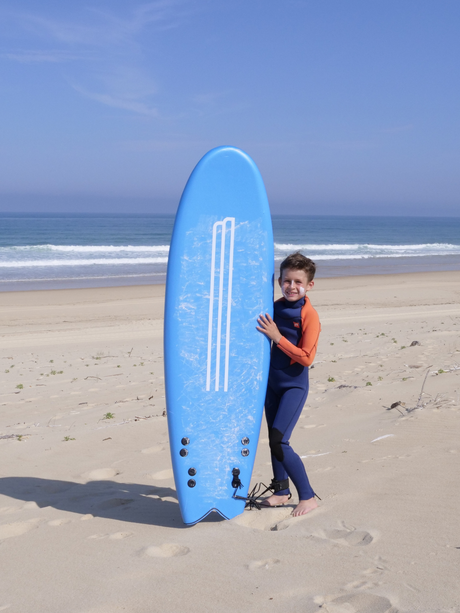
Combinaisons Enfant - HawaiiSurf

Kids' Wetsuits: Surf, Bodyboard, and Water Sports

(17 products)

A children's wetsuit to learn in the best conditions

Comfort plays a crucial role in learning water sports. A wetsuit designed for children allows young practitioners to stay in the water longer, retain their body heat, and fully enjoy their surfing, bodyboarding, or paddle sessions.

Since 1976, we have been helping families choose their equipment and have found that a suitable wetsuit significantly enhances children's experience in the water, regardless of their discipline.

View more

What thickness should you choose for a child?

Children are generally more sensitive to cold than adults. Therefore, it is important to choose a wetsuit suitable for the water temperature. A 3/2 mm wetsuit often provides an excellent compromise for summer sessions, while a 4/3 mm offers more comfort during spring, autumn, or in cooler regions.

For winter sessions or the coldest waters, thicker models effectively retain heat and extend the time spent in the water.

A complete range for the whole family

Needs naturally evolve with age and body shape. Parents can find suitable equipment in our collections of Men's Wetsuits and Women's Wetsuits to equip the whole family with consistent products suited to the conditions encountered.

This approach allows sharing the same sessions while benefiting from equipment specifically designed for each practitioner.

Full wetsuit or shorty for a child?

The choice mainly depends on the water temperature and the season. In summer or in the warmest waters, a Shorty can offer an excellent compromise between thermal comfort and freedom of movement.

When conditions become cooler, a full wetsuit generally remains the best solution to maintain a comfortable body temperature throughout the session.

Useful accessories when the water cools down

For young practitioners surfing outside the summer period, certain accessories become particularly interesting. Neoprene Booties help retain heat in the feet, while Neoprene Gloves limit heat loss in the hands.

When temperatures drop further, Neoprene Hoods provide additional protection that is particularly appreciated for long sessions.

Maintaining a children's wetsuit

Children often use their gear intensively during holidays or surf camps. Rinsing with clear water after each session and drying in the shade helps preserve the flexibility of the neoprene and extend the wetsuit's lifespan.

Products for Neoprene Care also help maintain the material's properties and prolong thermal performance season after season.

HawaiiSurf expertise since 1976

For fifty years, HawaiiSurf has selected the best children's wetsuits to support young sliding enthusiasts in all conditions. Our experience allows us to offer comfortable, durable models that are suited to the realities of the French coasts.

Whether you are looking for a children's surf wetsuit, a full children's wetsuit, a junior neoprene wetsuit, or simply the best children's neoprene wetsuit to support your child's progression, we always prioritize reliable, comfortable, and durable models.

Choisir la bonne combinaison néoprène enfant

Une combinaison néoprène adaptée permet aux jeunes pratiquants de profiter plus longtemps de leurs sessions tout en restant protégés du froid. Le choix dépend principalement de la température de l'eau, de la saison et de la fréquence de pratique.

Voir plus

Des combinaisons adaptées à tous les jeunes riders

Notre sélection rassemble des Combinaisons Homme, des Combinaisons Femme et des Combinaisons Enfant adaptées au surf, au bodyboard et à l'ensemble des sports nautiques.

Selon la saison et la température de l'eau, vous pourrez également vous orienter vers un Shorty ou compléter votre équipement avec des accessoires thermiques adaptés.

Complétez votre équipement néoprène

Retrouvez également nos Cagoules Neoprene, Chaussons Neoprene, Gants Neoprene, Tops Neoprene ainsi que nos produits d'Entretien Néoprène pour prolonger la durée de vie de votre équipement.

View as

FAQ

Choosing the right wetsuit for kids

How to choose a children's surf wetsuit?

Choose based on the child's size, the water temperature, and the activity being practiced. Then compare the thickness, body coverage, seams, and ease of putting it on. To learn surfing or bodyboarding, a wetsuit should allow for arm movement, squatting, and comfortable breathing, while still fitting well.

How to choose the size of a children's wetsuit?

Measure the height, chest circumference, and waist circumference of the child, then compare them to the manufacturer's guide. Weight can complement these measurements. Age indications are only a guideline: two children of the same age can have different body types. Also, check the correspondences between numbered sizes and the XXS, XS, S, or M sizes specific to each brand.

Should you get a larger wetsuit to anticipate growth?

Avoid intentionally choosing a wetsuit that is too large. A poor fit encourages water flushing and reduces thermal comfort, even with a thick material. The wetsuit should fit the child's current size. If they are between two sizes, compare all their measurements and try several cuts rather than choosing solely for the next season.

How to know if the wetsuit is too small or too big?

When trying it on, pull up the legs properly and position the inseam before putting on the top. A suit that is too small can compress the neck or hinder movement and breathing. A suit that is too large often has significant pockets at the back, underarms, or inseam. It should fit snugly without causing pain.

What thickness of wetsuit should you choose for a child?

A 2/2 mm wetsuit is generally aimed at mild conditions, a 3/2 mm provides intermediate protection, while the 4/3 and 5/4/3 mm are designed for cooler conditions depending on their construction. Check the recommended temperatures for the specific model. Also consider the wind, the duration of the sessions, and the child's comfort: one season alone is not enough to make a choice.

What do the numbers 3/2, 4/3, and 5/4/3 mean?

They indicate the material thicknesses in millimeters used on different parts of the suit. Thicker panels prioritize insulation, while thinner panels facilitate movement. Their distribution depends on the model. To compare two children's suits, also look at the seams, lining, and fit, which contribute to thermal comfort.

Should you choose a shorty or a full wetsuit for kids?

A shorty leaves the legs exposed and, depending on its cut, the arms as well. It is suitable when conditions allow for this limited coverage. A long-sleeve full suit covers the arms and legs for more complete protection. Choose based on the actual water temperature and intended use, rather than considering the shorty as the automatic choice for summer vacations.

Which wetsuit to choose for a first surfing lesson?

Choose a wetsuit suitable for the course conditions, comfortable and easy to put on with the help of an adult. Ask the school if the equipment is provided and what protection they recommend. Freedom of movement and the right size take precedence over competition features. The child should be able to paddle and get up without being hindered at the shoulders or knees.

What is the difference between Flatlock seams and GBS?

The Flatlock seams go through the material and allow more water circulation; they are especially suited for mild conditions. The GBS seams, glued and stitched with blind stitches, limit water entry without going through the entire thickness. For use in cold water, compare these finishes as much as the advertised millimeters.

Is a back closure practical for a child?

A back zip opening usually allows for a wide opening at the top to make it easier to put on. Several models in the collection use this system. An adult can help close the zip and adjust the collar without pinching the skin. Ease of use also depends on the flexibility of the material and the correct size of the wetsuit.

What is the difference between girls' and boys' wetsuits?

The cuts and proportions may vary depending on the models, as well as the colors. The fit to the body shape remains a priority: check the measurements in the guide rather than choosing solely based on the label girl or boy. If a cut does not fit, compare it with another model without automatically compensating with a larger size.

Does a suit completely prevent a child from getting cold?

No. It provides thermal protection, but comfort also depends on the conditions, fit, and time spent in the water. It does not guarantee an unlimited session duration. Plan for breaks and shorten the session if the child indicates that they are cold. A wetsuit does not replace supervision or appropriate safety equipment for the activity.

What accessories to add to a children's wetsuit?

According to the conditions and activity, booties, gloves, or a hood can enhance thermal protection. Make sure they come in a size that truly fits the child and that they do not hinder their movements. For bodyboarding, also check the fit of the booties in the fins. These accessories complement a well-chosen wetsuit.

How to maintain a children's wetsuit?

Rinse the inside and outside with fresh cold water after use, then let it dry in the shade in a ventilated area. Avoid hot water, the dryer, and direct sunlight. For putting on and taking off, gradually assist the panels without pulling on the collar or the zipper. Check out our guide to choosing your wetsuit and the manufacturer's instructions.