View more
Roam Surf Fins: Fine-Tune Your Board's Feel
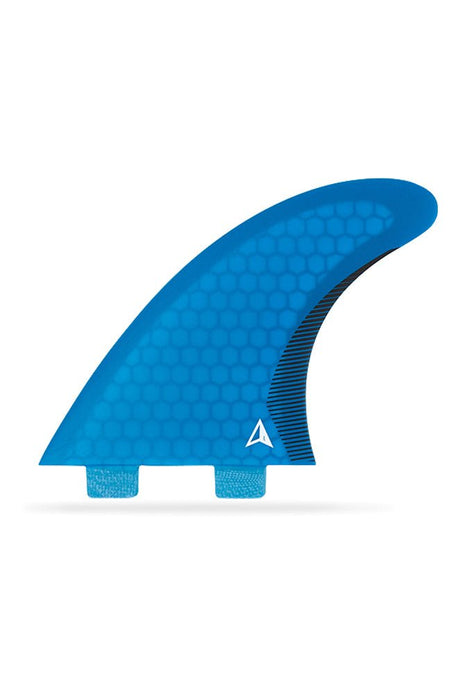
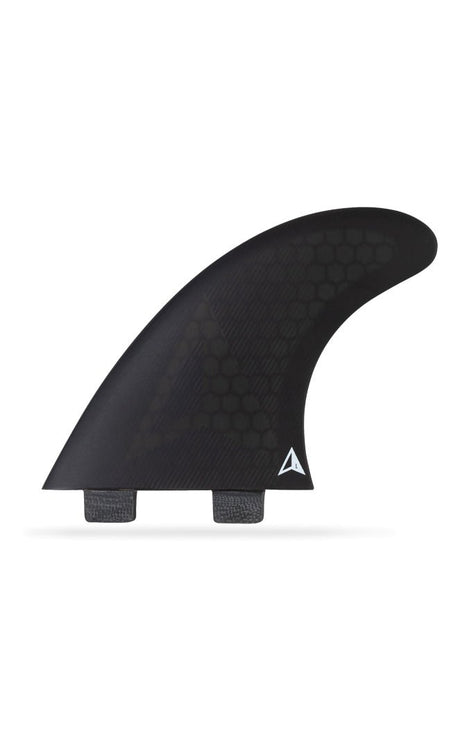
Roam surf fins let you tailor a board's feel to its shape, your surfing style, and the conditions.
The range covers several major surfboard setups: Single Fin, Twin Fin, Thruster, Quad, and 2+1.
This variety allows Roam to expand its range of accessories beyond board covers, leashes, and pads.
Explore all this gear in the main collection Roam.
What are surfboard fins for?
Fins help control your line.
They provide grip when the board is on rail and influence how it accelerates, pivots, and releases during maneuvers.
Changing fins can therefore significantly transform how the same board feels.
Why change your fins?
The original fins aren't necessarily the only worthwhile setup for a board.
Changing the template, size, or sometimes the setup lets you fine-tune the feel to suit the conditions.
It's also a way to evolve your setup without changing boards.
The different Roam fins
The HawaiiSurf range includes several Roam families.
It includes Single US Box, Twin FX1 and FX2, Side Bites, Quad Rears and Allround Thrusters, depending on availability.
Each family is designed for a different purpose.
Understanding FX1 and FX2
The Roam range includes FX1 and FX2 fins in particular.
These references correspond to different mounting systems.
So, the first thing to check before buying should always be the fin box on your board.
Check your fin box before buying
An excellent fin is no use if it doesn't fit the system installed on your board.
Identify your fin boxes before choosing.
Never force a fin into an incompatible box.
Roam Twin Fins
Roam offers fins designed for Twin Fins.
This setup uses two large side fins, without a traditional center fin.
It generally delivers a fast, smooth, and looser feel than a traditional thruster.
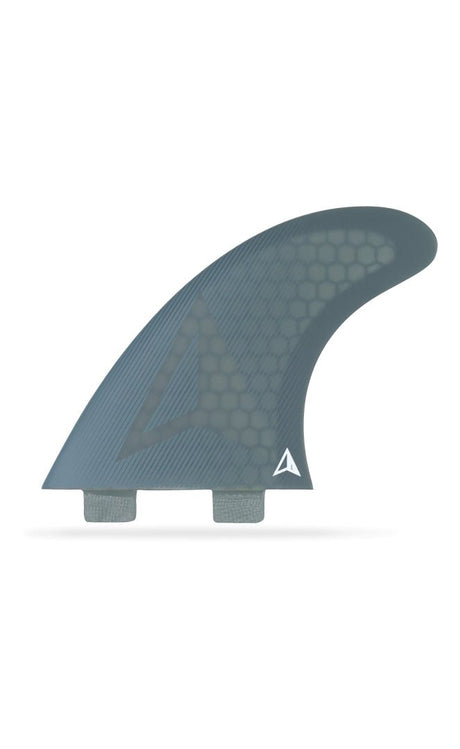
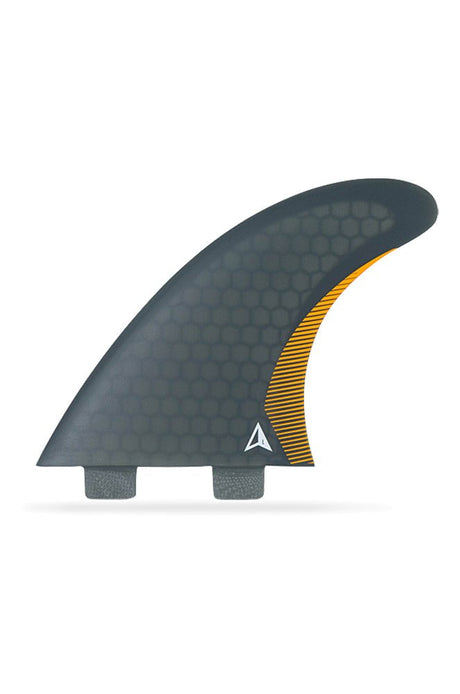
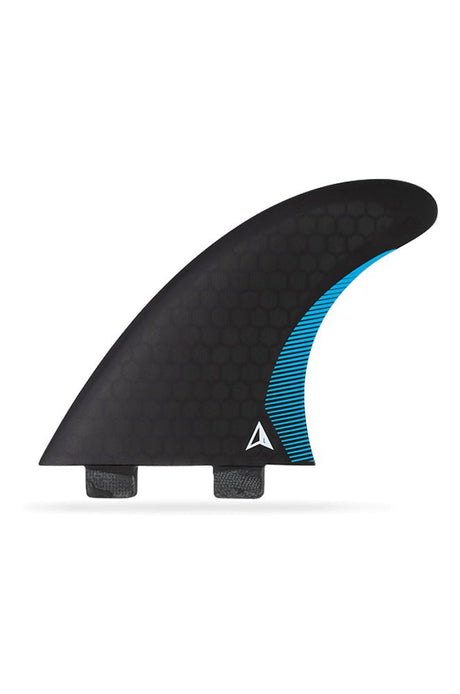
Roam Twin FX1 5.14"
The Twin FX1 5.14" is designed for modern twin fins.
HawaiiSurf describes it as a setup designed to balance speed, responsiveness, and flow, particularly suited to small and medium-sized waves.
Why choose a Twin Fin?
Two large fins generally create less drag than a three-fin setup.
The twin can therefore deliver plenty of speed and a feeling of freedom.
The trade-off is a different feel in terms of hold and control.
Twin Fin and small waves
The twin's natural speed makes it particularly appealing when the wave is slightly lacking in power.
A suitable board can generate speed quickly.
However, the shape is just as important as the fins.
Twin Fin and fish
The twin has historically been closely associated with the fish.
The combination of a relatively wide outline and two large fins can deliver a fast, smooth ride.
Modern twins can also be used on many other shapes.
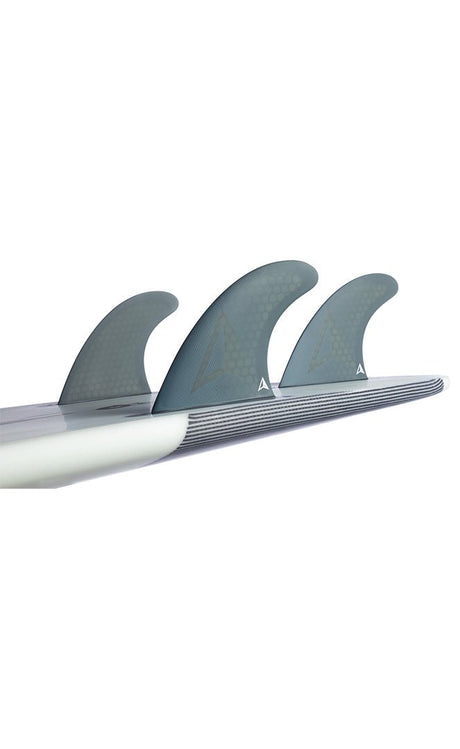
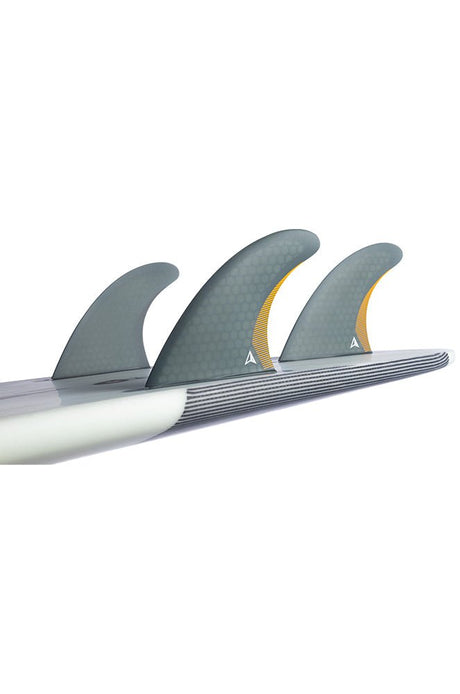
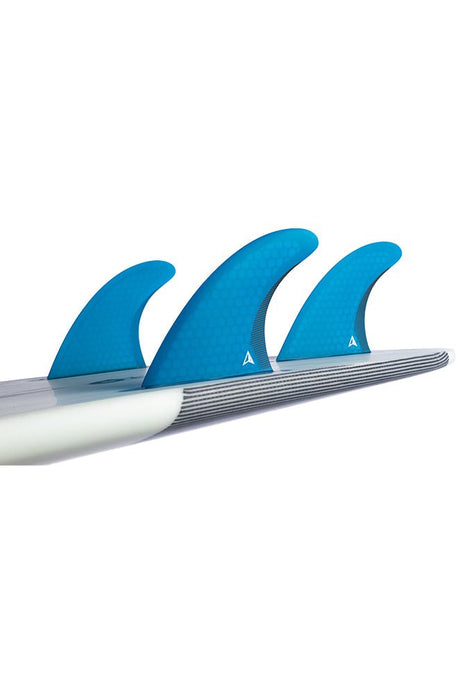
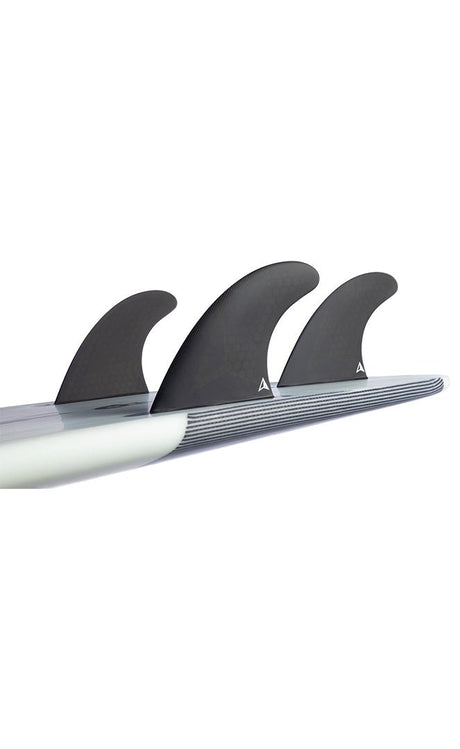
The Roam Thruster
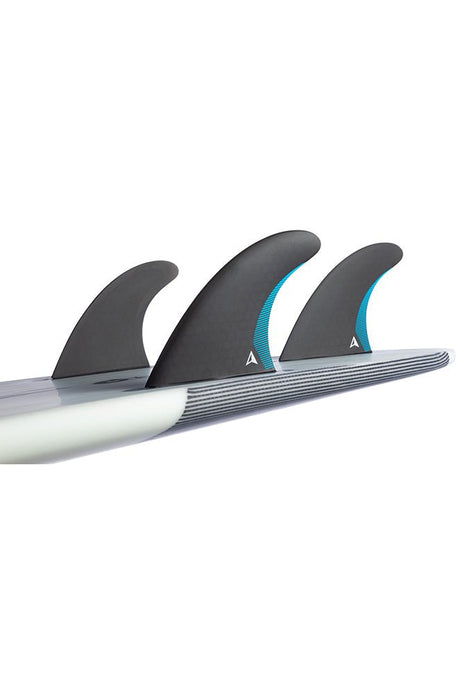
The Thruster uses three fins: two side fins and a center fin.
This setup has become a modern shortboard staple thanks to its balance of control, hold, and maneuverability.
Roam offers Allround FX2 sets, among others.
Roam Allround FX2 Thruster
The Allround FX2 range lets you set up a board as a thruster.
It's an appealing option for surfers looking for an all-around feel rather than a highly specialized setup.
The size should be chosen based on the available set and the surfer's profile.
Why choose a Thruster?
The thruster adds a center fin, increasing control compared with a twin.
The board remains maneuverable enough for linking turns.
This is a particularly versatile setup.
Thruster and shortboard
Many shortboards are designed around the thruster setup.
The combination of three fins helps maintain control when maneuvers become more committed.
The chosen template can then be used to fine-tune the feel.
The Roam Quad
A Quad uses four fins.
It does not have a traditional center fin.
This setup can generate plenty of speed while providing more hold than a twin in certain situations.
Roam Quad Rears
Roam offers Quad Rears designed to complement the front fins of a quad setup.
These small rear fins play an important role in tail control.
They shouldn’t be chosen independently of the rest of the set.
Roam Quad Rears FX1 4.05"
HawaiiSurf also carries the Quad Rears FX1 4.05", subject to availability.
They make up the rear pair in a quad setup.
Compatibility with the fin boxes and front fins should be checked before installation.
Roam Quad Rears FX2
The range also includes Quad Rears FX2.
They let you build or modify a quad setup that’s compatible with this system.
The final feel depends on how the fronts and rears work together.
Why are the rear fins smaller?
On many quad setups, the rear fins have less surface area than the front fins.
They contribute to control without reproducing exactly the role of the large side fins.
Their placement on the board also affects how they feel.
Quad or Thruster?
A quad can offer a different feeling of speed and projection thanks to the absence of a center fin.
A thruster often offers a more familiar feel and pronounced central control.
The best choice depends above all on the board's shape and your surf style.
Roam Side Bites
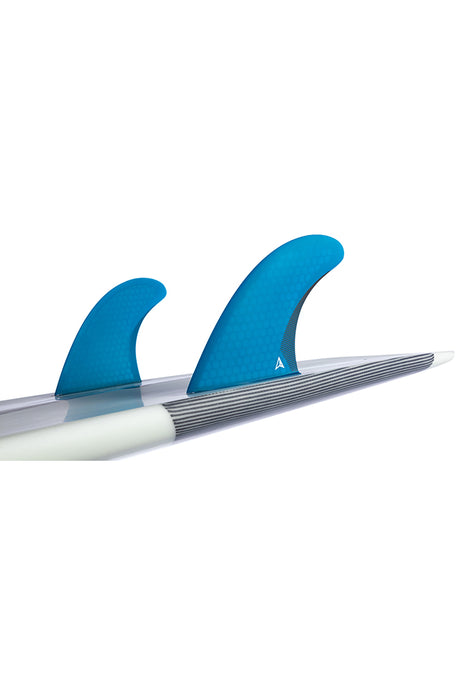
The Side Bites are small side fins used notably in 2+1 setups.
They work with a larger center fin.
This setup is common on modern longboards and midlengths.
Roam Side Bite FX1 3.57"
The Side Bite FX1 3.57" from Roam are designed for 2+1 setups.
Their relatively wide base is designed to provide stability and drive, while their flat foil supports controlled handling.
Side Bites and Midlengths
A midlength with a center box and two side boxes can be set up as a 2+1.
Side bites add lateral grip.
This lets you keep a large center fin while adding control through turns.
Side Bites and Longboards
The concept also works on many longboards.
A 2+1 setup can provide more control than a pure single-fin setup.
It’s particularly suited to riders looking for a surf style focused more on turns.
What is a 2+1 setup?
The 2+1 combines a large center fin with two small side fins.
It should not be confused with a thruster, where the three fins are generally closer in size.
The center fin remains dominant here.
Single Fin Roam
Roam also offers several Single Fins for US Box.
This setup uses a single large center fin.
It's especially associated with longboards and some midlengths.
Single US Box Roam
The Single US Box Roam is available in several sizes.
HawaiiSurf stocks sizes including 4.5", 6", 7", 8", 9" and 9.75", subject to availability.
What is a US Box?
A US Box is a long center fin box that lets you attach a fin and adjust its position.
The ability to move it is a valuable tuning tool.
Just a few centimeters can already change how the board feels.
Move a US Box fin forward
Moving the fin forward generally tends to free up the board more.
Surfing can feel more pivoty and maneuverable.
L'The precise effect depends on the board's shape, the fin size, and the surfer, however.
Move a US Box fin back
A fin positioned farther back generally tends to offer more hold.
The board may feel more stable and controlled through turns.
Adjusting the fin lets you fine-tune the feel without changing it.
What size Single Fin should you choose?
The size depends on the board's length, shape, and intended use.
A large fin generally offers more surface area and hold.
A smaller one can free up the board's performance.
Roam Single 4.5"
A 4.5" center fin is relatively small to be used alone on a traditional longboard.
This size may be used in certain specific setups.
The shaper's intended setup should guide your choice.
Roam Single 6"
A 6" fin is still relatively compact.
It may suit certain midlength or 2+1 setups, depending on the board.
You shouldn't choose based only on the board's length.
Roam Single 7"
A 7" fin offers more surface area.
It can work on various midlengths and some longboard setups, depending on the intended use.
Positioning it in the box lets you fine-tune its performance.
Roam Single 8"
The 8" is becoming a very common size on various midlengths and longboards.
It offers an interesting balance between control and maneuverability.
The fin's shape is just as important as its height, though.
Roam Single 9"
A 9" fin is especially common on longboards.
It offers more surface area to stabilize the tail and hold the line.
The template then lets you tune the board for more pivot or drive.
Roam Single 9.75"
The 9.75" offers even more surface area.
It can be a good choice for some larger longboards and classic setups.
The choice should always be consistent with the shape and surfing style.
Roam Flex Tip
The range also includes a Single US Box Flex Tip.
HawaiiSurf carries it in 7.5", 8.5", and 9.5" depending on availability.
What is fin flex?
A fin isn't necessarily completely rigid.
Some flex can store and then release energy during weight shifts.
How this flex is distributed depends on the construction and template.
Flex Tip and surf feel
A more flexible tip can give a different feel coming out of a turn.
The fin flexes under load before returning to its original position.
This effect needs to work with the desired surfing style.
Understanding a fin's template
The template is the fin's overall outline.
Two fins of the same height can have very different surface areas and behaviors.
Base, depth, rake, and tip should therefore be considered together.
The base
The base is the part of the fin closest to the board.
A large base is generally associated with more drive.
It allows the fin to transfer pressure efficiently during acceleration.
Depth
Depth is the distance between the board and the tip of the fin.
A deep fin puts more surface area in the water.
This notably affects lateral hold.
The rake
The rake describes how far back the fin extends.
A highly raked template doesn't pivot like a more upright fin.
This factor notably affects the length and flow of turns.
The tip
The tip is the end of the fin.
Its width, flex, and orientation all affect its overall behavior.
A small change can be noticeable on a high-performance fin.
The foil
The foil is the fin's profile.
It affects how water flows around the surface.
Side fins and center fins don't necessarily use the same foil.
Flat foil
The Side Bites FX1 3.57" Roam notably use a flat foil, with a flat inner face.
This geometry is common on some side fins.
It affects how the fin behaves during weight shifts.
Fiberglass
Roam uses fiberglass construction on some of its fins.
Fiberglass makes for a solid fin with mechanical properties suited to surfing.
The exact construction can vary by model.
Fin size and surfer weight
With thruster, twin or quad sets, fin size can be chosen based on the rider’s weight.
A heavier surfer puts more load on the fins.
However, the board’s shape and intended use should also be considered.
Fins and surfer skill level
A beginner generally looks for stability and predictable performance.
An experienced rider may want to fine-tune release, pivot or drive.
So choosing the most technical setup isn’t always the right move.
Fins and small waves
In small waves, generating and maintaining speed becomes particularly important.
A twin or certain relatively loose setups can be a good choice.
However, the board must be designed to work with this setup.
Fins and powerful waves
As the waves get faster and more powerful, grip becomes more important.
A set that offers control helps maintain your line under greater pressure.
The choice also depends on the rider’s skill level.
Drive
The drive is the setup’s ability to turn pressure into projection.
The fins’ base and rake contribute to this feel.
A board with plenty of drive can accelerate efficiently through turns.
Hold
The hold is the fins’ ability to maintain their line under pressure.
It becomes particularly important when the rider drives hard off the rail.
The set’s total surface area plays an important role.
Release
The release describes how the tail breaks free.
A setup with plenty of grip and a looser setup release in different ways.
Twin, thruster and quad setups deliver very different feels.
Pivot
A more upright fin generally tends to favor pivoting.
More rake often goes hand in hand with longer turns.
These principles should always be considered in the context of the complete shape.
A fin never works on its own
The final feel depends on how the fins work with the board.
Outline, rocker, rails, tail, volume and fin box placement all matter.
The same fin can therefore produce different feels on two boards.
Choosing fins for your board
Start by identifying the fin boxes and intended configurations.
Then determine your setup and the feel you’re looking for.
Size and template come later.
Shortboard fins
Shortboards are very often ridden as a thruster or quad.
Some modern boards support both setups.
Changing the setup can significantly change how the board feels without changing boards.
Fish fins
The Twin Fin setup is especially associated with fish boards.
Many modern fish boards use large side fins that generate speed and drive.
Choose a set that matches the fin box placement.
Midlength fins
Midlengths offer a wide range of setups.
Single, 2+1, twin or other setups can be used depending on the shape.
Roam Side Bites and Single Fins are particularly well suited to this style.
Longboard fins
Longboards often use a central US Box.
They can be ridden as a pure single or a 2+1 setup when side boxes are present.
The size and position of the center fin allow you to fine-tune the feel.
Fins and noseriding
When noseriding, hold in the longboard's tail becomes important.
A large fin can help stabilize the tail.
The longboard's shape and fin placement remain essential, though.
Fins and cruising
For a smooth, glide-focused surf with big turns, a single fin can offer a particularly enjoyable feel.
The line is different from a thruster.
The surfer relies more on the rail and movement across the board.
Fins and carving
For carving, drive and hold through the turn become especially important.
The surface area, base and rake of the set affect how it feels.
The right choice depends on the board and the type of turn you're looking for.
How do you install a Roam fin?
The method depends on the system.
Always clean the fin box before installation and check that nothing is stopping the fin from seating properly.
Never use excessive force.
Installing an US Box
An US Box generally uses a plate and screw to secure the fin in the fin box's track.
The fin can be moved before the final tightening.
This system lets you try out different positions.
Maintaining your Roam fins
Rinse your fins and fin boxes with fresh water after sessions when your gear has been heavily exposed to salt and sand.
Regularly inspect the edges and base.
A damaged fin can affect how your board feels and become sharp.
Removing sand from fin boxes
Sand can make installing and removing fins difficult.
Never force a stuck fin out of a dirty fin box.
Rinsing them often makes removal easier.
Transporting your fins
Removed fins should be protected.
Avoid leaving them loose in a bag where they could hit the board.
A dedicated pouch helps prevent knocks and also protects their edges.
Roam board bags
Roam offers several levels of board bags to protect your boards while traveling.
Daylite, Tech, or Coffin bags meet different transport needs.
Find them in our collection of Roam board bags.
Roam surf traction pads
Fins control part of the board's behavior in the water, while the pad provides grip for your back foot on the tail.
Both pieces of gear play a direct role in control.
Discover the different Roam surf traction pads.
Roam surf leashes
The leash completes your setup by keeping you connected to your board after a wipeout.
Its length and diameter should suit your board and the conditions.
Browse our selection of Roam surf leashes.
Build your Roam setup
Roam lets you outfit several key areas of your board.
Fins work beneath the board, the pad improves grip on the tail, the leash keeps you connected to the board, and the bag protects your gear out of the water.
Find all these categories in the Roam collection.
Roam in the HawaiiSurf surf world
Roam accessories let you adapt and protect different types of boards.
Shortboards, fish, midlengths, and longboards may require very different setups.
To complete your gear, explore our entire surf world.
Compare surf fins
Your choice shouldn't be limited to the brand.
The fin box system, setup, size, construction, and template should match your board.
Compare Roam with other brands in our collection of surf fins.
Roam Surf Fins Roam at HawaiiSurf
HawaiiSurf carries a wide range of Roam fins for several setups.
Single US Box, Flex Tip, Twin FX1/FX2, Side Bites, Quad Rears and Thruster let you adapt different types of boards, depending on availability.
Compatibility with your fin boxes always comes first.
Choosing Roam surf fins at HawaiiSurf
First, identify the fin system installed on your board.
Next, choose between Single, Twin, Thruster, Quad or 2+1, depending on the setups your board shape supports.
Fine-tune your choice by size and template.
Roam fins and other Roam accessories
Fins are only one part of your setup.
Round out your gear with Roam Roam board bags, Roam Roam surf pads and Roam Roam surf leashes.
Discover the full brand range in the Roam collection.
Find your Roam surf fins
Find Roam surf fins at HawaiiSurf to change how your board feels and tailor your setup to your riding style.
Choose Twin for speed and freedom, Thruster for versatility, Quad for drive and hold, 2+1 to control a Midlength or Longboard, or Single US Box for a more classic glide: every setup has its own character.
Explore our surf world, compare all our surf fins and round out your gear with Roam Roam board bags, Roam Roam surf pads and Roam Roam surf leashes.