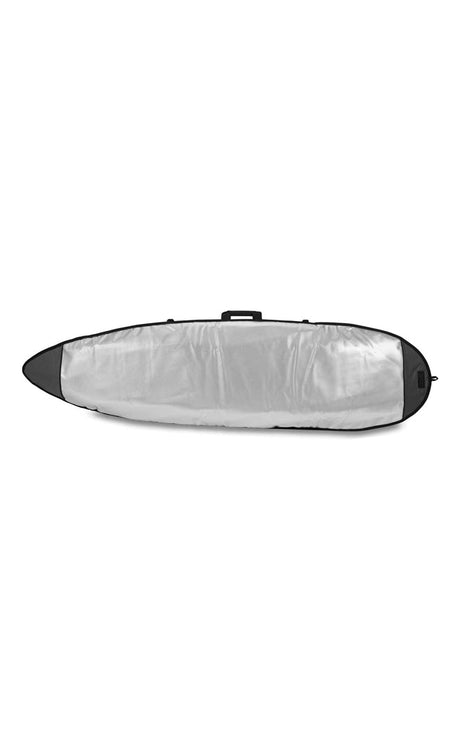
Housses de Surf : Protégez et Transportez Votre Planche - HawaiiSurf

Surf Bags: Protect and Transport Your Board

(64 products)
See more

The surfboard bag: an essential accessory for protecting your board

A Surf Bag is often one of the best-value accessories a surfer can buy. A board is far more likely to get damaged during transport, storage, or travel than while you're actually surfing. The right protection helps shield your gear from knocks, scratches, heat, and UV rays while preserving its performance over the long term.

Whether you carry your board to the beach every day or are planning a surf trip to the other side of the world, choosing a suitable bag is one of the best ways to extend the life of your Surfboard.


See more

Choosing a bag suited to your needs

Not all bags meet the same needs. For everyday trips, a lightweight bag effectively protects your board from minor knocks and the sun's rays. Surfers who travel regularly generally prefer more reinforced models that can withstand the sometimes rough handling of transport by car, train, or plane.

Since 1976, we've seen that a properly protected board keeps its original look and riding qualities for longer. A suitable bag is often a small investment compared with the cost of a repair or premature replacement.

A bag for every type of board

The choice depends directly on your board's shape. A Shortboard, a Surf Fish, or a Longboard doesn't have the same dimensions or transport requirements. A well-fitting bag offers better protection for your gear while making it easier to get around.

Larger boards often need reinforced padding and a design that can handle the extra weight and bulk. More compact boards, on the other hand, generally benefit from lighter board bags that are easier to handle every day.

Protect your gear season after season

Impacts against walls, roof straps that are too tight, UV rays, and heat building up inside a car can gradually damage a board. A good board bag provides an effective first line of defense against these everyday hazards.

Over the years, we’ve seen many perfectly maintained boards keep performing for a very long time, thanks to a few simple habits: using a suitable board bag, storing the board out of the sun, and taking a little care when transporting it.

A complete setup to take care of your board

Protecting a board takes more than just a board bag. Reliable Surf Leashes, Surf Fins suited to your riding style, and Surf Repair products also help keep your gear in great shape for longer.

The most discerning surfers often complete their setup with Surf Wax suited to the conditions for the best possible feel in every session.

L's HawaiiSurf expertise since 1976

For fifty years, HawaiiSurf has helped surfing enthusiasts choose their gear and accessories. Our selection of board bags meets the needs of occasional surfers as well as riders who hit the waves and travel throughout the year.

Because a good board deserves protection to match, we prioritize reliable, durable models suited to the real-world conditions surfers encounter along the French and European coasts.

Pourquoi utiliser une Housse de Surf ?

Une Housse de Surf permet de protéger efficacement votre matériel contre les chocs, les rayures, la chaleur et les UV. Indispensable pour le transport comme pour le stockage, elle prolonge la durée de vie de vos Planches de Surf.

Voir plus

Une protection adaptée à chaque type de board

Que vous surfiez un Shortboard, un Longboard, un Fish Surf, un Funboard ou un Softboard, il existe une housse adaptée à votre programme et à votre planche.

Les modèles légers sont parfaits pour les déplacements quotidiens tandis que les boardbags renforcés offrent une protection supérieure lors des voyages et des transports longue distance.

Complétez votre équipement

Retrouvez également notre sélection de Leashs Surf, de Dérives Surf et de Réparation Surf pour entretenir et protéger durablement votre matériel.

View as

FAQ – How to Choose Your Surfboard Bag

Which surfboard bag to choose for your board?

Choose based on the dimensions of your board, its shape, and your usage. A sock cover provides light protection against abrasions, a padded cover is more suitable for daily commutes, and a travel boardbag offers enhanced protection for more demanding transport. Also, check the number of boards intended, reinforcements, and carrying options.

How to choose the size of a surfboard bag?

Compare the length of your board with the maximum compatible length stated by the manufacturer. Also check the width and thickness, especially for a fish, funboard, or a bulky softboard. Some bags already include a margin: it is not necessary to always choose a larger size. The board should fit without forcing, with enough space to close the bag properly.

Does a shortboard cover fit a fish or a funboard?

Not always. A cover designed for a narrow shortboard may lack width at the nose or body of the board. For a fish, choose a shape that fits its more generous outline. For a funboard, check for models suitable for rounded noses and wider boards. A compatible length does not guarantee that the board will fit.

What is the difference between a sock cover and a padded cover?

A sleeve cover, often called a stretch cover, is lightweight and compact. It limits friction, small scratches, and the contact of wax with the transport environment. A adds protection against certain impacts due to its thickness and reinforcements. A sleeve alone does not replace a travel boardbag for handling in the hold.

Which cover to choose for daily commutes?

For regular trips to the spot, look for a padded bag suitable for your board, easy to open and carry. Compare the padding, nose and tail protection, closure, and shoulder strap. A lightweight bag may be sufficient when the board is not exposed to impacts; more protection is preferable if it is often loaded with other gear.

Which surfboard bag to choose for traveling by plane?

Choose a boardbag designed for travel, with appropriate padding and reinforcements, as well as a capacity that matches your boards. Check the protection of the ends, the dividers, and the internal support when they are present. Also, check the airline's size and weight limits before purchasing. Even a reinforced bag does not guarantee that there will be no damage during transport.

What thickness of padding should you choose?

The choice depends on exposure to impacts and the type of transport. Compare the stated thickness and its distribution: the padding can vary between the body of the cover, the nose, the tail, and the rails. For a trip, look at the overall design rather than just one number. The reinforcements, the support for the boards, and the quality of the dividers also matter.

Can you transport multiple boards in a surf bag?

Yes, if the cover is designed for this use. Adhere to the stated capacity and check the dimensions of each board: several thick boards may take up more space than the theoretical number suggests. Use the dividers and internal straps when provided. Do not force the closure to fit an extra board.

What is the benefit of a wheeled surfboard bag?

Wheels make it easier to move a loaded bag in airports and on flat surfaces. They are particularly useful for carrying multiple boards. However, they add weight and bulk, which should be considered in your baggage allowance. Compare the empty weight, handles, and external dimensions before making your choice.

Should you remove the fins before storing a board in its bag?

It depends on the bag and its use. Some models allow you to store a board with its fins attached, but this option must be indicated by the manufacturer. For air travel, remove the removable fins and protect them separately to limit pressure points. For fixed fins, ensure you have a compatible bag and appropriate protection.

Does a cover protect the board from the sun and heat?

Some covers help limit direct sun exposure, but no cover can replace protecting the board from high temperatures. Don't leave your gear in a hot car or exposed to the sun for long periods. A closed cover can also trap heat: prefer storage in the shade, in a cool and ventilated place.

Can you store a wet board in its bag?

For a short trip after the session, this may be necessary. Once you arrive, take out the board and let the cover dry open before storage. Permanently sealing wet gear encourages odors and can degrade certain components. Remove sand from the zippers and follow the maintenance recommendations specific to the model.

Which cover to choose for a longboard or a softboard?

For a longboard, check the length, the rounded nose, and the space needed around the tail. For a softboard, pay particular attention to the width and thickness: a cover designed for a narrow rigid board of the same length may be too tight. Compatible dimensions are more important than the category name.

How to maintain a surfboard bag?

Regularly remove sand and salt deposits, especially around the closures. Clean according to the manufacturer's instructions, then let it dry completely before storing. Do not use a washing machine or harsh products without explicit compatibility indications. Also inspect the seams, handles, straps, and wheels for wear before moving.