See more
IRID® electronic goggles, photochromic and polarized lenses, and Zeiss optics make up several distinct ranges.
Out Of goggles
The Out Of range lets you choose goggles based on the level of technology you’re looking for and the conditions you’ll use them in.
The brand develops several ranges, including Electra, Void, Katana, and Zenith.
Lens type is another of the main distinguishing features.
Check out all our ski and snowboard goggles.
Out Of for skiing
When skiing, light conditions can change quickly throughout the day.
Sun, clouds, fog, forest sections, and changes in exposure all affect the amount of light reaching the eye.
Your choice of goggles and lens should therefore suit these changing conditions.
Out Of for snowboarding
Out Of goggles can also be used for snowboarding.
Optical needs remain similar: eye protection, terrain visibility, contrast, and adaptation to changing light.
Your choice depends more on conditions and face shape than on the sport you practice.
Out Of IRID®
IRID® is one of Out Of’s most distinctive technologies.
It’s an electronic system that allows the lens to automatically adjust its tint to the light.
The technology works without a battery and requires no input from the rider during use.
A battery-free electronic lens
What sets IRID® apart is that it combines electronic technology with battery-free operation.
L’lens reacts automatically to the light it receives.
So riders don’t need to use a button or recharge a battery before a day in the mountains.
How does IRID® work?
IRID® uses an integrated solar cell to power the system.
L’electronic lens then adjusts its tint to the amount of available light.
This technology allows Out Of to respond much faster than the changes typically associated with traditional photochromic lenses.
Adjustment in less than a second
On the Electra 3, Out Of claims the tint adjusts in less than a second.
This speed allows the goggles to react when the rider quickly moves from a bright area to a darker one.
The transition happens automatically.
From S1 to S3
L’Electra 3 can adjust its tint from category S1 to category S3, as well as between these different levels.
This covers conditions ranging from low light to much sunnier situations.
The goggles automatically adjust their tint within this range.
Understanding lens categories
The S1, S2 and S3 categories indicate different levels of light filtration.
An S1 lens lets in more light and is suitable for darker conditions.
An S3 lens filters more light and is better suited to bright conditions.
Out Of Electra
Electra is the family of goggles developed around IRID® technology.
It represents the most high-tech approach in the Out Of range.
Several generations have followed one another, improving the integration of electronics, speed and field of view.
Out Of Electra 3
L’Out Of Electra 3 is the third generation of ski goggles using IRID®.
It adjusts its tint in less than a second and works without a battery.
The brand also claims an S1 to S3 range and a particularly wide field of view.
The Electra 3’s field of view
Out Of claims up to 218° of field of view on the Electra 3.
The third-generation solar cell is integrated to minimize its impact on the visible area.
A wide peripheral field of view helps you retain more information about your surroundings as you descend.
Out Of and contrast
Mountain vision depends on more than just the amount of light.
The ability to distinguish changes in terrain, tracks and variations in snow is also important.
Out Of therefore works on the tint and optical properties of its lenses to improve terrain visibility.
The Electra 3’s Blue lenses
Out Of offers Blue lenses on the Electra 3, among other options.
The brand says they’re designed to boost contrast and bring out terrain details.
The lens tint then changes thanks to IRID® technology.
IRID® or traditional photochromic?
Both technologies are designed to adjust filtration according to the light.
The main difference is how they work.
IRID® uses electronic technology powered by a solar cell to enable particularly fast changes.
Out Of photochromic lenses
Out Of also makes more traditional photochromic lenses.
These lenses gradually adjust their level of filtration as light conditions change.
They’re a great option for riders looking for a single lens that can handle a range of conditions.
Out Of The One
The One refers to an Out Of technology that combines photochromic technology and polarization.
It allows the lens to adapt to changing light while reducing some unwanted reflections.
Out Of uses it in particular on the Void The One and Katana The One.
Why use a polarized lens on snow?
Snow can produce particularly strong reflections.
Polarization filters out some of these reflections.
This can provide greater visual comfort in particularly bright or reflective conditions.
Photochromic and polarized
A lens combining photochromic technology and polarization performs two distinct functions.
Photochromic technology gradually adjusts the tint according to the light.
Polarization filters certain reflections to improve visual comfort.
Out Of Void
The Void is one of the main frame styles in the Out Of range.
It’s available with several lens configurations, depending on the version.
The Void The One version lets you enjoy the brand’s photochromic and polarized combination.
Out Of Void The One
The Void The One combines the Void frame with The One technology.
It’s designed for riders looking for a lens that adapts to changing light while reducing glare.
It’s an alternative to IRID® electronic goggles.
Out Of Katana
The Katana is another family of goggles from Out Of.
As with the Void, several configurations may be available depending on the collection.
The choice must take into account the frame shape, lens, and fit on the face.
Out Of Katana The One
The Katana The One also features the brand’s photochromic and polarized technology.
This configuration lets you use a single lens across a wide range of light conditions.
Polarization further enhances this adaptation by reducing reflections.
Out Of and Zeiss
Out Of also uses Zeiss lenses on some of its goggles.
Zeiss has extensive expertise in optics.
This collaboration allows Out Of to offer another product family focused on optical quality and clarity.
Out Of Zenith
The Zenith is part of Out Of’s goggle range, which comes equipped with Zeiss lenses in select configurations.
It is available in different sizes.
Choosing the right size lets you adapt the frame to different face shapes.
Zenith M or Zenith L
Out Of offers the Zenith in sizes M and L.
The choice depends mainly on face width and how the goggle fits with your helmet.
A properly sized goggle should make even contact without excessive pressure.
Out Of Bio Project
The Bio Project is also among the goggles in Out Of’s current range that use Zeiss lenses.
It offers another option from the brand for riders who aren’t necessarily looking for IRID® electronic technology.
Availability of different models may vary by collection.
Choosing your Out Of goggle
Start by identifying the conditions you ride in most often.
If rapid changes in brightness are your priority, IRID® technology represents the brand’s most advanced approach.
For gradual adaptation with reduced reflections, The One versions are another option.
Choosing according to the weather
Weather remains essential when choosing a goggle.
A lens that’s too dark becomes uncomfortable when visibility drops.
Conversely, insufficient filtration can cause glare when brightness increases sharply.
Out Of for sunny days
When the sky is clear, a lens must filter enough light.
Adaptive technologies can automatically or gradually increase or decrease their level of filtration depending on how they work.
Comfort also depends on the lens tint and the rider’s sensitivity.
Out Of for bad weather
Under cloud cover or in fog, more light needs to reach the eye.
A technology that can reduce its filtration then becomes particularly useful.
L’The goal is to maintain enough contrast to read changes in the terrain.
Out Of for changing weather
Days that alternate between sunshine and cloudy spells are where adaptive technologies really shine.
They mean you don't have to keep changing lenses as light conditions shift.
However, reaction speed varies depending on the technology used.
IRID® for rapid changes
IRID® really stands out when light levels change quickly.
Moving from a very bright area to a dark one can happen in seconds, such as between an exposed run and a shaded section.
The electronic response allows the lens to quickly adapt to these changes.
Choosing the size
A mask should fit the shape of your face.
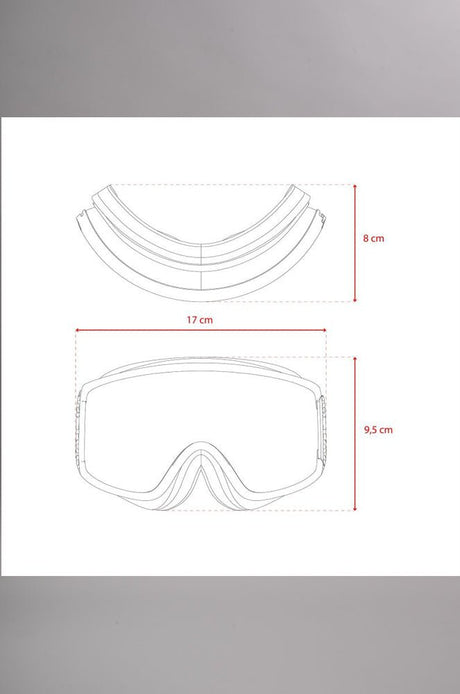
Out Of provides the dimensions of its different frames to make comparisons easier.
Frame width is a useful factor to consider when choosing.
Out Of and medium to wide faces
L’Electra 3 is described by Out Of as being suitable for medium to wide faces.
Its frame is listed as 174 mm wide.
This information makes it easier to compare the fit with other models from the brand.
Helmet compatibility
The mask must work properly with the helmet being used.
The top of the mask and the edge of the helmet should fit together without leaving too much of a gap or creating uncomfortable pressure.
The strap must also stay properly positioned.
Out Of and prescription glasses
L’Electra 3 has an OTG frame, short for Over The Glasses, designed to be worn over prescription glasses.
Out Of says it has worked on both comfort and airflow in this setup.
The prescription glasses must still be compatible with the frame.
What is an OTG mask?
A mask OTG is designed to allow certain prescription glasses to be worn underneath.
The frame offers more room and accommodates glasses temples.
It's still important to check the overall fit and comfort before a full day on the slopes.
Mask ventilation
Airflow helps limit moisture buildup inside.
The goggle vents should therefore remain unobstructed.
L’fit with the helmet can also affect the ventilation of the setup.
The anti-fog coating
Out Of also works on the fog resistance of its lenses.
For the Electra 3, the brand claims fog resistance of over 300 seconds under its test protocol.
L’lens care is still essential to maintain its performance.
Preventing fogging
Avoid blocking the goggle vents with a beanie or a helmet that isn’t positioned properly.
Also, don’t let wet snow build up inside.
After your session, let your goggles dry thoroughly in a well-ventilated place.
Cleaning your Out Of goggles
Use a soft cloth suitable for lenses to clean the outside.
Avoid abrasive materials and products that aren’t recommended.
L’inside should be handled with extra care to avoid damaging the coatings applied to the lens.
Don’t rub a wet lens
If a lens gets wet, it’s best to let it dry rather than rub it aggressively.
This precaution is especially important on the inner surface.
It helps preserve coatings designed, among other things, to reduce fogging.
Storing your Out Of goggles
Once dry, store your goggles in a suitable bag or case.
Protect the lens from scratches during transport.
Avoid placing hard objects directly against its surface.
Replacing your goggle lens
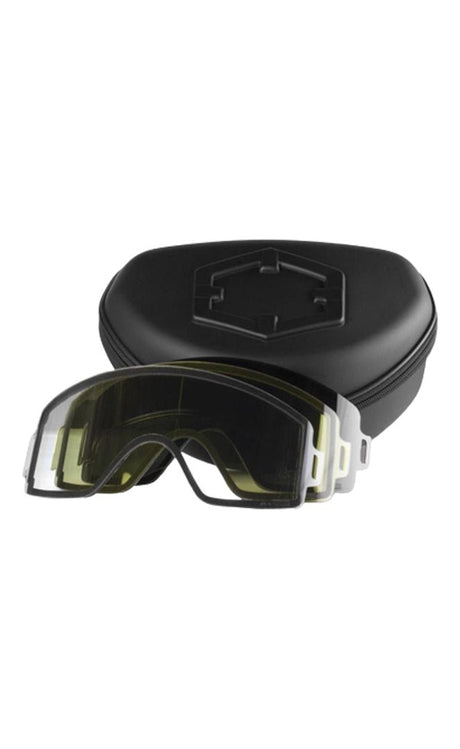
Out Of also offers lenses and spare parts for several models.
Replacing the lens can extend the life of your goggles or let you adapt your setup.
Always check that the lens is fully compatible with the frame.
Why keep your goggles for longer?
A frame in good condition does not necessarily need replacing when only the lens is damaged.
The availability of spare parts can therefore extend the product’s useful life.
However, a heavily scratched lens should be replaced if it obstructs your vision.
Out Of Made in Italy
L’Electra 3 is described as Made in Italy by Out Of.
The brand particularly highlights the work done to integrate the electronics and frame components.
This technical sophistication contributes to the Electra family’s premium positioning.
Compare Electra and The One
Electra and The One address the same issue of changing light conditions with two different approaches.
Electra uses IRID®, an instantly adaptive electronic technology that requires no battery.
The One combines traditional photochromic technology with polarization.
The choice depends on the level of responsiveness and type of technology you’re looking for.
Comparing Out Of goggles with fixed-lens goggles
A fixed lens maintains the same level of protection all day.
An adaptive lens adjusts its tint to the light.
This feature can be especially useful when weather or exposure changes regularly.
Out Of goggles for groomed runs
On groomed runs, changes in light exposure can be frequent.
A run can alternate between sunny sections, shaded areas, and stretches under cloud cover.
Out Of’s adaptive technologies are designed to handle these changing conditions.
Out Of goggles for snowboarding
Snowboarders enjoy the same benefits.
The park, slopes, and trailside can all have very different light and terrain.
The frame should also fit your helmet and face shape.
Out Of goggles for freeriding
Reading the terrain is especially important in freeriding.
Ungroomed snow has many variations that you need to spot quickly.
Contrast, field of vision, and adapting to light are therefore key factors.
Out Of accessories
Out Of also offers a range of accessories for its goggles.
Cases, protective bags, lenses, and select spare parts help you carry, protect, or maintain your gear.
Availability depends on the models and collections.
Also check out our ski and snowboard accessories.
Out Of at HawaiiSurf
Discover Out Of at HawaiiSurf and choose your goggles to suit your face shape, riding style, and the light conditions on the mountain.
IRID® electronic technology, photochromic and polarized lenses, The One lenses, or Zeiss lenses: Out Of’s range offers several ways to optimize your vision while skiing and snowboarding.
Discover all our ski and snowboard goggles and complete your setup with our ski and snowboard accessories.


 30% off
 30% off
 30% off