
The essential elements of a roller setup
An essential element of every pair of roller skates, on some models it will be fixed, but most often removable and interchangeable, allowing for varied uses on the same boot.
The uses are defined by two factors: the wheelbase and the diameter of the wheels mounted.
The wheelbase corresponds to the distance between the front wheel axle and the rear wheel axle, thus measuring the length of ground contact.
The shorter the frame, the more maneuverable it will be but it will generate less inertia (requiring more frequent pushes), as found on freeride models of 243 mm or the first leisure fitness models of 250 mm, or even shorter on slalom models down to 230 mm.
As the frame length gradually increases towards about 260 mm or 270 mm, it is more oriented towards distance or touring use.
Race models, among the longest (except for 5-wheel/downhill setups), have frames exceeding 330 mm for maximum power transfer (requiring stronger but less frequent pushes), while being stiffer to handle.
The wheel diameter is closely linked to the wheelbase, ranging from 72 mm in slalom to 125 mm for racing, and determines the mounting height. For slalom and freeride, 4-wheel configurations are preferred, with diameters up to a maximum of 84 mm, allowing the skater to stay low on their supports for better precision and dynamics.
For fitness, wheel diameters start at 80 mm for basic models, evolving to 84 mm, 90 mm in 4-wheel setups, or even 100 mm or 110 mm in 3-wheel setups, for more comfort or to cover longer distances.
In racing, 4-wheel setups with 100 mm or 110 mm wheels are common, as well as 3-wheel configurations with 125 mm wheels.
3-wheel setups have somewhat blurred the lines, with 3x110 mm configurations that can be very short for freeride, although still taller than 80 mm wheels. This height can be felt during jump landings but can be considered as an alternative more oriented towards commuting, gaining comfort thanks to the 110 mm diameter while remaining maneuverable due to a short frame.
-
-
Rollerblade
Overdrive 10.6" Frame 4X84 Plate 4 Inline Roller Wheels
€95,96€119,95Unit price /Unavailable -
Rollerblade
243 Twister Frame 4X80 Plate 4 Inline Roller Wheels
€95,96€119,95Unit price /Unavailable -
Rollerblade
270 Lightning Frame 3X110 Plate 3 Wheels Inline Roller
€95,96€119,95Unit price /Unavailable -
Rollerblade
248 Lightning Frame 3X110 Plate 3 Wheels Inline Roller
€95,96€119,95Unit price /Unavailable -
-
-
-
-
-
-
-
-
-
-
-
-
-
-
-
-
-
-
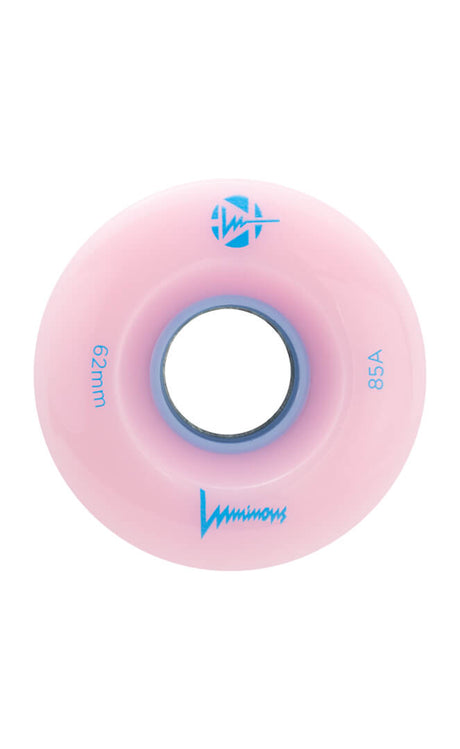
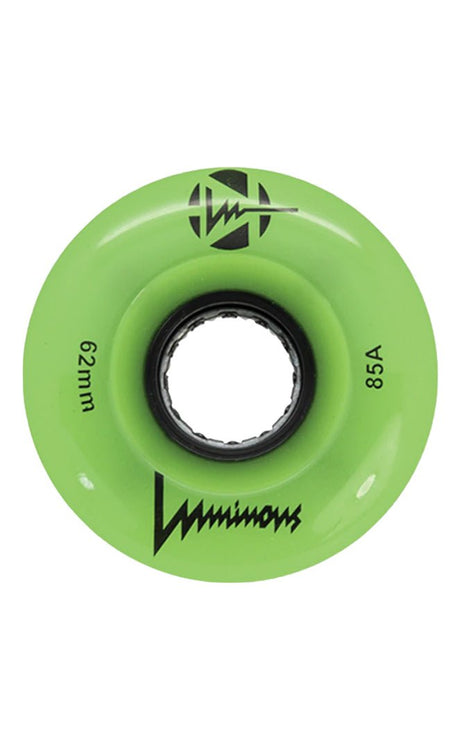
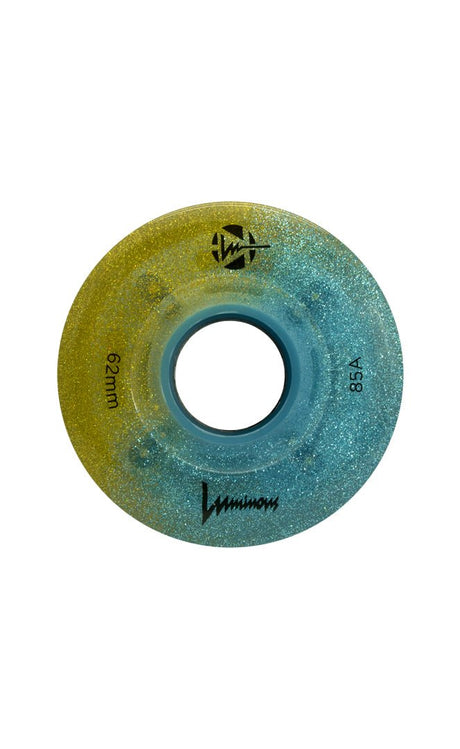
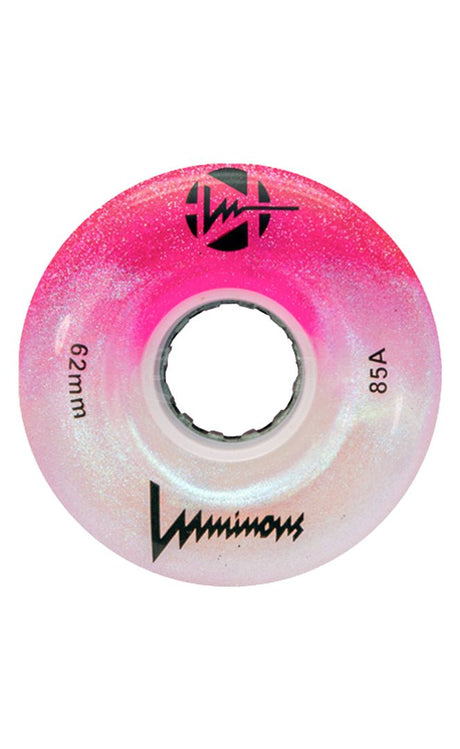
The diameter will be specific to the frame of your roller skate. However, you will find different hardness options ranging from 80A to 90A. The versatile medium hardness is between 84 and 85A, which balances comfort and glide. The closer you get to 80A, the softer the wheel will be, providing more comfort and grip, but the rubber will deform more and retain less speed. Approaching 90A, the wheel will allow for higher speeds but will also transmit more vibrations and require a bit more attention because, depending on the surface, it may slip.
In some ranges of very technical wheels, you can find a bi-density construction, combining two rubber hardnesses to take advantage of both worlds. You will also find different wheel profiles:
- The round profile, smoother and more comfortable in turns.
- The elliptical profile (bullet profile), slightly sharper, allows for higher speeds and better momentum retention by having a reduced contact surface, very common in speed skating but also on some urban models.
- The square/beveled profile, almost exclusive to aggressive skating, allows for maximum contact compared to the usual small diameters.
-
-
-
-
-
-
-
-
-
-
-
-
-
-
-
-
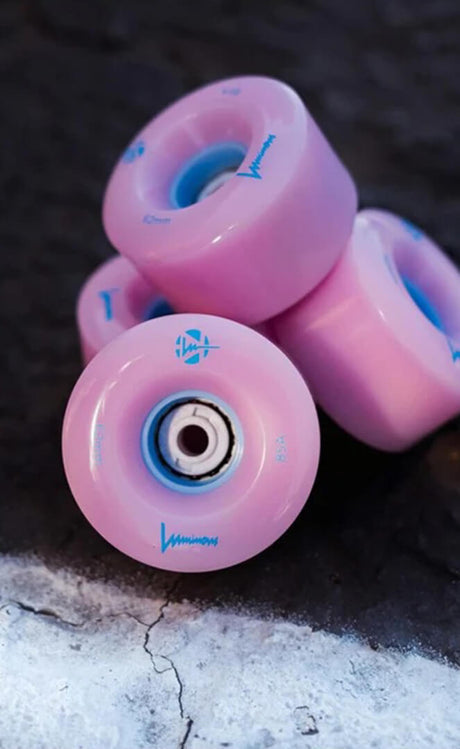
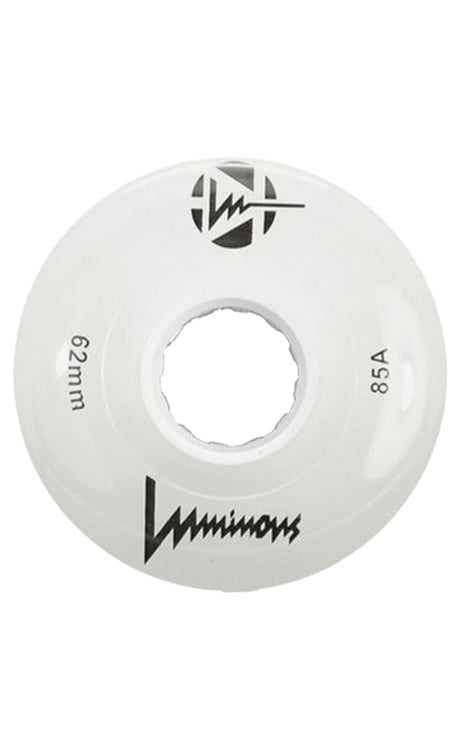
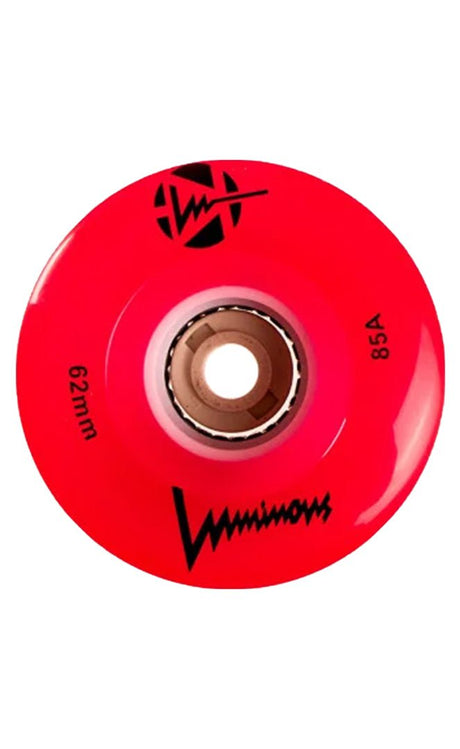
Luminous
Luminous White Glow 85A Light-Up Inline Roller Skates Wheels
€35,95Unit price /Unavailable -
-
-
Roller bearings are among the most important for a smooth glide! The dimensions are standard, whether for the wheels or the axle. You will find the ABEC standard, the most common, or ILQ bearings, guaranteeing a more efficient performance specially designed for urban skating!
Most often made of steel, there are also ceramic versions, more high-end, allowing for more fluidity and less maintenance than classic bearings.